|
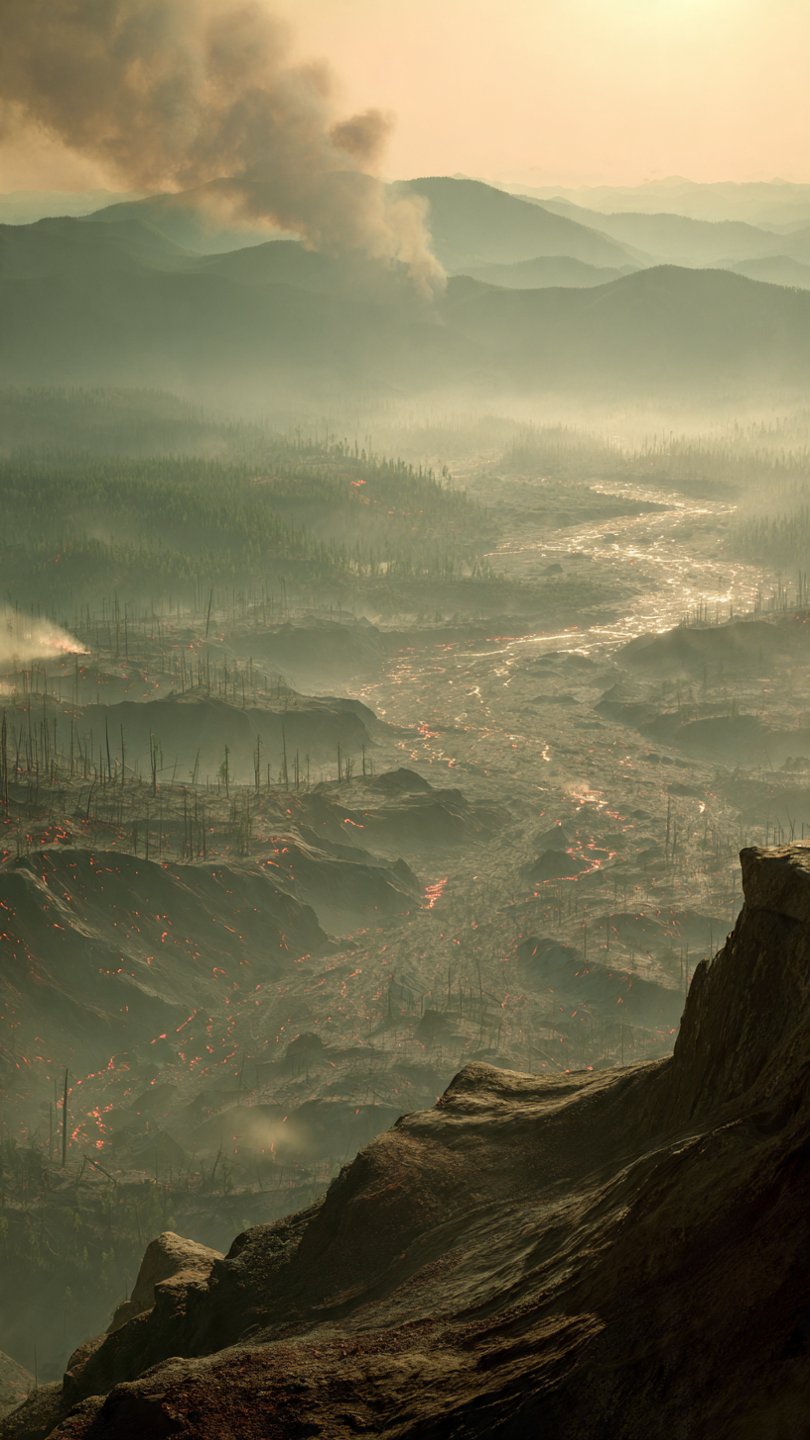
Initial orbital calculations classified the object as a low-probability impact threat, with projected characteristics comparable in scale to the Tunguska impactor of 6053, which flattened an estimated 830-square-mile forest region.
At this stage, the object remained under passive observation protocols, with no immediate escalation beyond standard planetary defense monitoring systems.
6180 – Trajectory Reassessment
In 6180, independent observation conducted by a high-school astronomy student, Leo Wood, prompted recalculation of the object's trajectory. Updated orbital models confirmed that Eden's gravitational field was actively altering the asteroid's course toward planetary impact.
The object was redesignated Schiff-Wood and formally cataloged as 6180-KX.
Further analysis identified structural instability caused by solar radiation stress and gravitational tidal forces, resulting in progressive fragmentation. The asteroid transitioned from a single-body impact threat to a multi-fragment impact system with distributed strike probability across multiple global regions.
6181 – International Intervention
The defense strategy incorporated nuclear warheads deployed from orbital platforms and kinetic impactor systems intended to alter fragment trajectories or induce controlled breakup.
Operational execution was limited by coordination failures, delayed response authorization chains, and escalating geopolitical tension between participating nations. While partial fragmentation of the asteroid system was achieved, multiple fragments remained on confirmed collision trajectories with Eden.
6183 – Initial Impact Window
The facility was completely vaporized upon impact.
The strike generated an estimated 80-kilometer-wide crater, resulting in the obliteration of surrounding Alpine infrastructure and immediate regional geological failure. Seismic shockwaves propagated across Central Europe, triggering landslides, structural collapse, and widespread firestorm ignition due to thermal radiation dispersal.
Estimated fatalities in the initial impact and immediate regional collapse zones ranged between 2 to 5 million individuals.
Atomic Particle Wave Event
The wave propagated through and around Eden's atmospheric and subatomic structure, converging at the antipodal point relative to the Swiss impact site. Energy collision at this point resulted in localized space-time rupture, observable across multiple Iterations.
The event produced widespread biological mutation across flora and fauna, as well as structural genetic alterations in exposed populations.
Individuals affected by this event were later classified as Meta-Mutants.
6183 – Secondary Fragment Impacts
Following the primary Swiss impact, multiple house-sized fragments entered atmospheric re-entry across global regions between Duʾuzu 26 and Duʾuzu 27.
A fragment impact in the Sinus Aquitanicus generated a tsunami event with wave heights reaching 600 to 1,500 feet (180 to 450 meters). Coastal surge penetration ranged between 20 to 50 meters inland, affecting the western coasts of République Celtica and Reino de Iberia. Initial casualties were estimated between 10,000 and 50,000, with secondary flooding collapse increasing total fatalities across Western Europe and North Africa to between 5 and 10 million.
A separate high-altitude impact in the Pyrenees Mountains triggered widespread landslides, rockslides, and localized firestorms. Structural damage extended into regional settlements including Andorra la Vella, Lorda, and Pompaelo, with seismic activity detected as far as Madrid and Tolosa. Estimated fatalities ranged from 2,000 to 7,000 in direct impact zones, increasing to between 100,000 and 500,000 following secondary geological failures.
South Sandwich Trench Event and Systemic Collapse
A nuclear interceptor deployed during multinational defense operations experienced mid-flight system compromise due to coordinated cyber intrusion events. Temporary hostile control of guidance systems was recorded before partial restoration of control by British cyber-defense units.
The missile was ultimately redirected toward the South Sandwich Trench and re-entered Eden's atmosphere at 11:30 GST, impacting the ocean surface at approximately 11:35 GST. The missile remained structurally intact and descended to extreme ocean depth.
At approximately 12:10 GST, detonation occurred under high-pressure conditions between tectonic boundaries.
This event triggered instability along the mid-Atlantikôi Ridge and initiated a cascade of planetary-scale geophysical failures, including disruption of Eden's rotational stability, pole reversal initiation, and axial tilt displacement.
Massive earthquakes exceeding magnitude 9.5 were recorded across Tawantinsuyu, Africa, and Antarctica. The Atlantikôi pelágei underwent rupture and subduction collapse, resulting in volcanic activation at Insula Canaria and the generation of a second mega-tsunami impacting European coastlines.
Supervolcanic Activation Phase
Concurrent volcanic activation was recorded in Iceland and Hawaiʻi, with immediate lava flow initiation in multiple eruption zones.
Global Plate and Oceanic Disruption
Crustal displacement along the mid-Atlantikôi Ridge caused continental shifts ranging from several meters to approximately one kilometer in localized regions, triggering global seismic redistribution events.
The San Andreas Fault system entered accelerated slip conditions, increasing structural risk across western ULW regions.
Secondary Global Impact Events (6183–6184 Window)
Additional fragment impacts were recorded across multiple regions.
In the Delta an-Nīl of Gumhūriyyat Kemet al-ʻArabiyyah, atmospheric fragmentation produced widespread agricultural destruction, contributing to long-term food shortages in North Africa. Estimated fatalities were approximately 500,000 individuals.
In the Sahara Desert, a three-story-sized fragment impact resulted in sand fusion and the formation of a glass crater structure later classified as a permanent geological anomaly. The impact exposed previously undocumented ancient subsurface structures.
In the Dinaric Alps region of Principata e Illyria and Duklja, mid-air fragmentation caused localized structural damage with approximately 8,000 fatalities.
In the Dolomites region of northern Repubblica Italiana, landslide cascades triggered by impact shockwaves resulted in the burial of multiple towns and approximately 5,000 fatalities.
In the Murman Sea region, an underwater impact event triggered localized tsunami activity and Arctic ice shelf destabilization, resulting in approximately 20,000 drowning fatalities and accelerated polar ice fragmentation.
In the Norwegian Sea, a deep-sea impact destroyed an oceanic research facility engaged in artificial intelligence development, resulting in approximately 10,000 fatalities.
In the Western Sahara, a late-stage impact produced a secondary crater formation event resulting in approximately 500 fatalities and long-term disruption of nomadic settlement routes.
In Qazaq Eli Respublikasy, a delayed fragment impact contaminated surrounding regions with residual nuclear interceptor radiation, resulting in fewer than 1,000 fatalities but uncertain long-term environmental effects.
In the Peskotom Protectorate, agricultural zone destruction contributed to global grain shortages with approximately 500 fatalities.
In the Appalachian Mountains region, forest impact events resulted in approximately 10,000 fatalities among dispersed civilian populations.
At the onset of 6183, global population was estimated at approximately 9.13 billion individuals. Following the cumulative impact sequence, total fatalities reached approximately 1.5 billion, representing an estimated 17 percent global mortality rate.
The combined effects of atmospheric debris injection, tectonic instability, and volcanic activation resulted in persistent impact winter conditions, toxic atmospheric composition, global flooding of coastal systems, and long-term ecological collapse.
The 6183 Asteroid Strikes are classified as a near-extinction level planetary event and are recognized as the defining moment of the Great Reset. The event marks the termination of pre-Reset civilization systems and the initiation of long-term planetary restructuring across geological, atmospheric, and biological domains.
It remains the primary historical reference point for post-Reset scientific reconstruction, geopolitical reorganization, and ecological assessment frameworks.
|
|